Sports related concussion has received a lot of media and scientific attention because of the risk of longterm or delayed cognitive changes. These include the pathological changes consistent with chronic traumatic encephalopathy and the clinical condition defined as traumatic encephalopathy syndrome. While there have been major changes to concussion management in professional sports, little is known about knowledge and attitudes with respect to concussion in high school athletes. This scoping review assessed the currently available data over the last 25 years. The authors identified only 6 studies that explored the knowledge and attitudes of the athletes themselves. Most paper were concerned with coach or parent related knowledge and beliefs. The data was mostly related to male rugby players and showed better knowledge in metropolitan versus rural areas in most studies. Of note, the school nurse was highlighted as a previously not considered source of advice with respect to concussion management. This was particularly so in rural areas or low socioeconomic areas where access to a doctor was more difficult. The studies also highlighted that despite the improved knowledge with respect to concussion, there has not been an associated change in behaviour with most high school athletes continuing to play, or returning to play early, for so called ‘important” matches.
This is an Open Access article, distributed under the terms of the Creative Commons Attribution 4.0 International License (http://creativecommons.org/licenses/by/4.0/), which permits unrestricted use, distribution and reproduction in any medium or format, provided the original work is properly cited.
Concussion, Head Injury, Sports Related Concussion, Scoping Review
1. Introduction
Sport related concussion has received a lot of media and scientific attention in recent years. In Australia there has been a large focus on the risk of concussion and chronic traumatic encephalopathy (CTE) in the various codes of rugby. SmartRugby
was introduced in 2011 to educate coaches of players of all ages and levels about concussion. Most players start their rugby career in primary school or high school. While there have been major changes to management and knowledge of concussion in professional level rugby and sport, we were interested in the data related to knowledge of concussion and its management in high school athletes.
The objective of this scoping review was to explore the data and level of understanding, knowledge and attitudes towards concussion in high school athletes and highlight whether the attitudes and reporting of concussion have changed since the new data and guidelines on concussion management in sport.
2. Methods
The author team designed a search to look for articles relating to knowledge and attitudes about concussion and its management in high school students. They searched Medline/Pubmed using the search terms: education, concussion, head injury, club, school and sport. All human, English studies from 1/1/2000 to 30/06/2025 were included. Each author did the search independently. Additional articles were sourced by manually searching the reference lists of selected articles and through a grey search via Google search engine. The article abstracts were then assessed by both authors independently to determine whether they were appropriate for inclusion. One author (SJ) reviewed the full text articles of the remaining studies to assess their suitability for inclusion. The studies were mostly cross-sectional and were deemed of appropriate quality for inclusion using the PRISMA-ScR criteria
[2]
Prisma Scoping Reviews PRISMA-ScR Checklist available from:
. As most studies had different methodologies and outcomes, it was decided to report the findings for each article separately. Data extracted for each study included population group, survey questions/tools employed, response rates and findings.
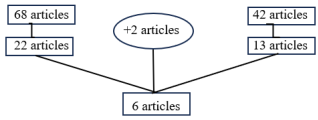
Figure 1. Search results and final article number.
3. Results
68 articles were sourced by one author and 42 by another. A further two articles were sourced from reference lists. One author included 13 studies after review of titles and abstracts. The other author included 22 articles. After review of the whole manuscript, a total of 6 articles were found to address the question of knowledge and attitudes towards concussion in high school students (Figure 1). The vast majority of the articles excluded examined the knowledge and attitudes of coaches and/or parents rather than the sports players themselves. The other studies were of university level athletes.
Two of the studies were conducted in America, one in Michigan in the study
[4]
Wallace J, Covassin T, Nogle S, Gould D, Kovan J. Concussion knowledge and reporting behavior differences between high school athletes at urban and suburban high schools. J Sch Health. 2017; 87: 665-674.
Chandran, PhD, MS; Aliza K. Nedimyer, MA, ATC; Zachary Y. Kerr, PhD, MPH; Cathleen O’Neal, MS, ATC||; James Mensch, PhD, ATC||; Susan W. Yeargin, PhD Concussion Knowledge, Attitudes, and Self-Reporting Intentions in Youth Athletes Journal of Athletic Training 2020; 55(10): 1027-1034 Concussion
. Both these studies examined the differences between metropolitan and more rural settings and the effect of socio-economic standing (SES) on knowledge and attitudes with respect to concussion. The assessment tool used in both studies was very similar and they were both cross sectional studies. In both studies, knowledge about symptoms of concussion was better in metropolitan than rural settings. This difference was also seen when comparing higher SES (better knowledge) with lower SES (worse knowledge). Interestingly, the willingness to report concussion was similar between the two groups in the Michigan study
[4]
Wallace J, Covassin T, Nogle S, Gould D, Kovan J. Concussion knowledge and reporting behavior differences between high school athletes at urban and suburban high schools. J Sch Health. 2017; 87: 665-674.
but in more rural areas there was a hesitancy to actually report a concussion partly because the players did not want to see a doctor. Players were also more likely to report concussion in schools who had an athletic trainer but an athletic trainer was generally only present in schools with higher SES and in metropolitan rather than rural schools.
In the North Carolina study
[5]
Chandran, PhD, MS; Aliza K. Nedimyer, MA, ATC; Zachary Y. Kerr, PhD, MPH; Cathleen O’Neal, MS, ATC||; James Mensch, PhD, ATC||; Susan W. Yeargin, PhD Concussion Knowledge, Attitudes, and Self-Reporting Intentions in Youth Athletes Journal of Athletic Training 2020; 55(10): 1027-1034 Concussion
, the authors also looked at the difference in attitude and willingness to report concussion between male and female respondents. They were interested in the difference between genders as there are both sociological and developmental factors that affect knowledge and attitude with respect to concussion. In this study, females were more willing to report concussion than males. The authors raised the question whether this was because more females had suffered concussion than males. They also noted that females are more likely to seek medical attention than males. Females also had a greater attitude of seriousness about concussion than males. Higher SES and urban-dwelling, as in the Michigan study, were overall associated with a better knowledge about concussion.
Another paper from 2012
[6]
Hollis SJ, Stevenson MR, McIntosh AS, Shores EA, Finch CF. Compliance with return-to-play regulations following concussion in Australian schoolboy and community rugby union players. Br J Sports Med. 2012 Aug; 46(10): 735-40.
studied Australian rugby players and their compliance with return to play guidelines after concussion. This study included high school and adult players. None of the high school participants complied with return to play rules and most were not aware of the return to play rules for concussion. Players aged 21-26 were most likely to have been informed about return to play rules after concussion.
A New Zealand study
[7]
Garry Sye, S John Sullivan, Paul McCrory High school rugby players’ understanding of concussion and return to play guidelines Br J Sports Med 2006; 40: 1003-1005.
examined knowledge about concussion in New Zealand high school rugby players playing in the school’s top team. There was an 80% response rate to the survey. 61% of respondents appeared to understand what concussion was but 25% thought you had to be “knocked out cold” to be concussed. Half reported being given, or knowing of, the return to play guidelines and 61% identified the three week stand down rule. Most who had experienced a concussion had however returned to play at their own discretion with only 22% receiving medical clearance. Just over a quarter (27%) of respondents believed a concussed player should play in an important game and 76% reported a concussed player had stayed on to play. One third believed a concussed player had been under pressure to continue playing. Fewer than half actually knew the return to play guidelines. Another study of New Zealand adolescent rugby union players was performed as part of the RugbySmart Concussion Innovation
[8]
Danielle M. Salmon, Jody Mcgowan, S. John Sullivan, Ian Murphy, Simon Walters, Chris Whatman et al. What they know and who they are telling: Concussion knowledge and disclosure behaviour in New Zealand adolescent rugby union players Sports Medicine and Biomechanics Pages 1585-1594 | Published online: 08 Apr 2020
. Most participants in the study were male and over 72% identified as non-European with 23% Maori and 47% from the Pacific Islands. Nearly two thirds (63%) of players indicated they were aware of New Zealand Rugby’s concussion guidelines. Māori and Pasifika players were less likely to be aware of these guidelines compared to European New Zealanders (adjusted OR 0.5, p = 0.03). Guideline awareness was significantly higher for those from higher socio-economic status when compared to low SES (Unadjusted OR 1.63, p = 0.04); however, when ethnicity and school locations were controlled for, this relationship to SES became non-significant (Adjusted OR= 1.3, p=0.37). Students who had suffered a previous concussion were more likely to know about the guidelines. The coach was the key individual for the provision of concussion information and disclosure of symptoms for players. Students from a higher SES were more likely to see a doctor before returning to play. In lower SES the school nurse was the person most likely to whom a concussion would be reported. The most common reason for not reporting a concussion was to be able to stay in the game (31%). While students knew the symptoms of concussion, the recovery process was less well understood. A history of concussion and awareness of NZR guidelines had no influence on whether a player indicated they should leave the field following a concussion.
The last study was of Irish school rugby players
[9]
Sinéad E Delahunty 1, Eamonn Delahunt, Brian Condon, David Toomey, Catherine Blake Prevalence of and attitudes about concussion in Irish schools' rugby union players J Sch Health. 2015 Jan; 85(1): 17-26.
. More than 72% said they would play an important game even if concussed and 83% of those who had been concussed still said they would play an important game even if concussed. Almost one third said they would not report a concussion themselves. Sixty percent had received some education on concussion and one quarter knew of the return to play guidelines. Almost 90% believed they would benefit from further education.
4. Discussion
This scoping review was designed to question what high school sportsmen know about concussion, what their attitude to concussion is and how their management of concussion and behaviours are affected by this knowledge. Our search terms may have missed some studies but our methods to find studies elsewhere i.e. in the reference lists and in a grey search helped to find studies we may have missed. This review highlights the paucity of data available with respect to high school sportspeople. The attitudes, knowledge and behaviours of coaches, officials and parents have been published in far more research papers than that of the high school sport players themselves. Scoping reviews do not usually formally assess the methodological quality of studies but we have attempted to highlight some of the methodological issues relevant to this review. There was a lot of variety in the methodological quality and scientific rigour of the studies and most were cross sectional studies. While response rates were reasonable in most studies, populations were not always well defined and did not necessarily include large samples. Despite these limitations, our approach has enabled us to address the primary research question and summarise the current data available.
The studies in this review included data from America, Australia, Ireland and New Zealand. Most studies focused on high school students playing rugby and therefore the data mostly reported on male high school students. One of the American studies included a reasonable number of female participants and showed that even in high school, females were more likely to report concussion, seek treatment and acknowledge concussion was a significant injury compared to their male counterparts. The studies from New Zealand were most comprehensive and done some years apart. The second New Zealand study took place after introduction of the RugbySmart education program. Despite 14 years between the studies, the return to play rules and recovery process were still not generally known. Knowledge about concussion, and a history of previous concussion still seemed not to affect behaviour with a high percentage of respondents still wanting to play on despite concussion or not reporting concussion so they could play in the next game. Playing an important game took preference over correct management of concussion. The findings for Irish high school rugby players were similar to that of New Zealand students with knowledge or a previous concussion not influencing behaviour or desire to keep playing or play an important game.
Several studies highlighted the differences between different socioeconomic groups and rural and metropolitan centres. Some raised the fact that poor access to medical services, or a preference to not see a doctor, impacted appropriate management of concussion. Coaches and athletic trainers were generally the main source of knowledge and advice although school nurses, who have generally not been targeted by education programs, were an important source of care in one study.
5. Conclusion
There is little data available about knowledge and behaviours with respect to concussion in high school sportspeople. While there is good knowledge as what concussion is and that it is serious, there is a lot less knowledge of the return to play rules. Further, knowledge about concussion has not led to a change in behaviour with general underreporting, not going off the field and playing “important” games even if concussed. Given there are rarely health professionals or extra coaches on the sidelines to spot and remove concussed players and manage them appropriately in high school sport, there needs to be a major change in behaviour in response to concussion for all sports players. Ideally this could be implemented using one of the behaviour change models e.g. the behaviour change wheel or theoretical domains framework. Several recent papers are starting to address this issue
[10]
Steffan A Griffin 1 2, Nirmala Kanthi Panagodage Perera 3 4, Andrew Murray 5 6, Catherine Hartley 7, Samantha G Fawkner 8, Simon P T Kemp 2 9, Keith A Stokes 2 10, Paul Kelly. The relationships between rugby union, and health and well-being: a scoping review. Br J Sports Med 2021 Mar; 55(6): 319-326.
Gorgoni G, Monthuley G, Andersen TE, Kümmeth-Gangel N, Pavlinac Dodig I, Dinç D, Meyer T, Nordström A. Harmonisation and implementation of sports-related concussion guidelines in European youth football: the REFORM Erasmus+ project. BMJ Open Sport Exerc Med. 2025 Nov 16; 11(4): e002928.
Badenhorst M, Romanchuk J, Salmon D, Brown JC, Hendricks S, Walters S. Concussion Risk and the Need for Prevention: An Exploration into the Complexity of Community Perspectives in Rugby Union. Sports Med. 2025 Dec; 55(12): 3129-3142.
. The aim would be to educate players and change behaviour from an early age but this will only succeed if there is an acceptance by parents and coaches that players need to come off the field and may miss important games to allow adequate recovery. The correct management of concussion may also be helped by the presence of more athletic trainers or involvement of school nurses given the current (limited) data but this will be a challenge in many communities where the “she’ll be right” attitude of Australia is ingrained in the community.
Abbreviations
CTE
Chronic Traumatic Encephalopathy
Author Contributions
Stacey Jankelowitz: Conceptualisation, Data curation, Formal Analysis, Writing – original draft, Writing – review & editing
Wallace J, Covassin T, Nogle S, Gould D, Kovan J. Concussion knowledge and reporting behavior differences between high school athletes at urban and suburban high schools. J Sch Health. 2017; 87: 665-674.
Chandran, PhD, MS; Aliza K. Nedimyer, MA, ATC; Zachary Y. Kerr, PhD, MPH; Cathleen O’Neal, MS, ATC||; James Mensch, PhD, ATC||; Susan W. Yeargin, PhD Concussion Knowledge, Attitudes, and Self-Reporting Intentions in Youth Athletes Journal of Athletic Training 2020; 55(10): 1027-1034 Concussion
Hollis SJ, Stevenson MR, McIntosh AS, Shores EA, Finch CF. Compliance with return-to-play regulations following concussion in Australian schoolboy and community rugby union players. Br J Sports Med. 2012 Aug; 46(10): 735-40.
Garry Sye, S John Sullivan, Paul McCrory High school rugby players’ understanding of concussion and return to play guidelines Br J Sports Med 2006; 40: 1003-1005.
Danielle M. Salmon, Jody Mcgowan, S. John Sullivan, Ian Murphy, Simon Walters, Chris Whatman et al. What they know and who they are telling: Concussion knowledge and disclosure behaviour in New Zealand adolescent rugby union players Sports Medicine and Biomechanics Pages 1585-1594 | Published online: 08 Apr 2020
Sinéad E Delahunty 1, Eamonn Delahunt, Brian Condon, David Toomey, Catherine Blake Prevalence of and attitudes about concussion in Irish schools' rugby union players J Sch Health. 2015 Jan; 85(1): 17-26.
Steffan A Griffin 1 2, Nirmala Kanthi Panagodage Perera 3 4, Andrew Murray 5 6, Catherine Hartley 7, Samantha G Fawkner 8, Simon P T Kemp 2 9, Keith A Stokes 2 10, Paul Kelly. The relationships between rugby union, and health and well-being: a scoping review. Br J Sports Med 2021 Mar; 55(6): 319-326.
Gorgoni G, Monthuley G, Andersen TE, Kümmeth-Gangel N, Pavlinac Dodig I, Dinç D, Meyer T, Nordström A. Harmonisation and implementation of sports-related concussion guidelines in European youth football: the REFORM Erasmus+ project. BMJ Open Sport Exerc Med. 2025 Nov 16; 11(4): e002928.
Badenhorst M, Romanchuk J, Salmon D, Brown JC, Hendricks S, Walters S. Concussion Risk and the Need for Prevention: An Exploration into the Complexity of Community Perspectives in Rugby Union. Sports Med. 2025 Dec; 55(12): 3129-3142.
Jankelowitz, S., Tastula, K. (2026). Scoping Review of Knowledge and Attitude of High School Sports Players to Concussion. American Journal of Sports Science, 14(2), 21-24. https://doi.org/10.11648/j.ajss.20261402.12
Jankelowitz, S.; Tastula, K. Scoping Review of Knowledge and Attitude of High School Sports Players to Concussion. Am. J. Sports Sci.2026, 14(2), 21-24. doi: 10.11648/j.ajss.20261402.12
Jankelowitz S, Tastula K. Scoping Review of Knowledge and Attitude of High School Sports Players to Concussion. Am J Sports Sci. 2026;14(2):21-24. doi: 10.11648/j.ajss.20261402.12
@article{10.11648/j.ajss.20261402.12,
  author = {Stacey Jankelowitz and Kylie Tastula},
  title = {Scoping Review of Knowledge and Attitude of High School Sports Players to Concussion},
  journal = {American Journal of Sports Science},
  volume = {14},
  number = {2},
  pages = {21-24},
  doi = {10.11648/j.ajss.20261402.12},
  url = {https://doi.org/10.11648/j.ajss.20261402.12},
  eprint = {https://article.sciencepublishinggroup.com/pdf/10.11648.j.ajss.20261402.12},
  abstract = {Sports related concussion has received a lot of media and scientific attention because of the risk of longterm or delayed cognitive changes. These include the pathological changes consistent with chronic traumatic encephalopathy and the clinical condition defined as traumatic encephalopathy syndrome. While there have been major changes to concussion management in professional sports, little is known about knowledge and attitudes with respect to concussion in high school athletes. This scoping review assessed the currently available data over the last 25 years. The authors identified only 6 studies that explored the knowledge and attitudes of the athletes themselves. Most paper were concerned with coach or parent related knowledge and beliefs. The data was mostly related to male rugby players and showed better knowledge in metropolitan versus rural areas in most studies. Of note, the school nurse was highlighted as a previously not considered source of advice with respect to concussion management. This was particularly so in rural areas or low socioeconomic areas where access to a doctor was more difficult. The studies also highlighted that despite the improved knowledge with respect to concussion, there has not been an associated change in behaviour with most high school athletes continuing to play, or returning to play early, for so called ‘important” matches.},
 year = {2026}
}
TY  - JOUR
T1  - Scoping Review of Knowledge and Attitude of High School Sports Players to Concussion
AU  - Stacey Jankelowitz
AU  - Kylie Tastula
Y1  - 2026/04/10
PY  - 2026
N1  - https://doi.org/10.11648/j.ajss.20261402.12
DO  - 10.11648/j.ajss.20261402.12
T2  - American Journal of Sports Science
JF  - American Journal of Sports Science
JO  - American Journal of Sports Science
SP  - 21
EP  - 24
PB  - Science Publishing Group
SN  - 2330-8540
UR  - https://doi.org/10.11648/j.ajss.20261402.12
AB  - Sports related concussion has received a lot of media and scientific attention because of the risk of longterm or delayed cognitive changes. These include the pathological changes consistent with chronic traumatic encephalopathy and the clinical condition defined as traumatic encephalopathy syndrome. While there have been major changes to concussion management in professional sports, little is known about knowledge and attitudes with respect to concussion in high school athletes. This scoping review assessed the currently available data over the last 25 years. The authors identified only 6 studies that explored the knowledge and attitudes of the athletes themselves. Most paper were concerned with coach or parent related knowledge and beliefs. The data was mostly related to male rugby players and showed better knowledge in metropolitan versus rural areas in most studies. Of note, the school nurse was highlighted as a previously not considered source of advice with respect to concussion management. This was particularly so in rural areas or low socioeconomic areas where access to a doctor was more difficult. The studies also highlighted that despite the improved knowledge with respect to concussion, there has not been an associated change in behaviour with most high school athletes continuing to play, or returning to play early, for so called ‘important” matches.
VL  - 14
IS  - 2
ER  -
Jankelowitz, S., Tastula, K. (2026). Scoping Review of Knowledge and Attitude of High School Sports Players to Concussion. American Journal of Sports Science, 14(2), 21-24. https://doi.org/10.11648/j.ajss.20261402.12
Jankelowitz, S.; Tastula, K. Scoping Review of Knowledge and Attitude of High School Sports Players to Concussion. Am. J. Sports Sci.2026, 14(2), 21-24. doi: 10.11648/j.ajss.20261402.12
Jankelowitz S, Tastula K. Scoping Review of Knowledge and Attitude of High School Sports Players to Concussion. Am J Sports Sci. 2026;14(2):21-24. doi: 10.11648/j.ajss.20261402.12
@article{10.11648/j.ajss.20261402.12,
  author = {Stacey Jankelowitz and Kylie Tastula},
  title = {Scoping Review of Knowledge and Attitude of High School Sports Players to Concussion},
  journal = {American Journal of Sports Science},
  volume = {14},
  number = {2},
  pages = {21-24},
  doi = {10.11648/j.ajss.20261402.12},
  url = {https://doi.org/10.11648/j.ajss.20261402.12},
  eprint = {https://article.sciencepublishinggroup.com/pdf/10.11648.j.ajss.20261402.12},
  abstract = {Sports related concussion has received a lot of media and scientific attention because of the risk of longterm or delayed cognitive changes. These include the pathological changes consistent with chronic traumatic encephalopathy and the clinical condition defined as traumatic encephalopathy syndrome. While there have been major changes to concussion management in professional sports, little is known about knowledge and attitudes with respect to concussion in high school athletes. This scoping review assessed the currently available data over the last 25 years. The authors identified only 6 studies that explored the knowledge and attitudes of the athletes themselves. Most paper were concerned with coach or parent related knowledge and beliefs. The data was mostly related to male rugby players and showed better knowledge in metropolitan versus rural areas in most studies. Of note, the school nurse was highlighted as a previously not considered source of advice with respect to concussion management. This was particularly so in rural areas or low socioeconomic areas where access to a doctor was more difficult. The studies also highlighted that despite the improved knowledge with respect to concussion, there has not been an associated change in behaviour with most high school athletes continuing to play, or returning to play early, for so called ‘important” matches.},
 year = {2026}
}
TY  - JOUR
T1  - Scoping Review of Knowledge and Attitude of High School Sports Players to Concussion
AU  - Stacey Jankelowitz
AU  - Kylie Tastula
Y1  - 2026/04/10
PY  - 2026
N1  - https://doi.org/10.11648/j.ajss.20261402.12
DO  - 10.11648/j.ajss.20261402.12
T2  - American Journal of Sports Science
JF  - American Journal of Sports Science
JO  - American Journal of Sports Science
SP  - 21
EP  - 24
PB  - Science Publishing Group
SN  - 2330-8540
UR  - https://doi.org/10.11648/j.ajss.20261402.12
AB  - Sports related concussion has received a lot of media and scientific attention because of the risk of longterm or delayed cognitive changes. These include the pathological changes consistent with chronic traumatic encephalopathy and the clinical condition defined as traumatic encephalopathy syndrome. While there have been major changes to concussion management in professional sports, little is known about knowledge and attitudes with respect to concussion in high school athletes. This scoping review assessed the currently available data over the last 25 years. The authors identified only 6 studies that explored the knowledge and attitudes of the athletes themselves. Most paper were concerned with coach or parent related knowledge and beliefs. The data was mostly related to male rugby players and showed better knowledge in metropolitan versus rural areas in most studies. Of note, the school nurse was highlighted as a previously not considered source of advice with respect to concussion management. This was particularly so in rural areas or low socioeconomic areas where access to a doctor was more difficult. The studies also highlighted that despite the improved knowledge with respect to concussion, there has not been an associated change in behaviour with most high school athletes continuing to play, or returning to play early, for so called ‘important” matches.
VL  - 14
IS  - 2
ER  -





 Share This Article
 Twitter
 Linked In
 Facebook
 Copy
Copy Download